How to Build a Content Strategy for High-Intent Traffic
Getting traffic to a website is useful, but getting the right traffic is what actually helps a business grow. In 2026, brands are not just trying to increase pageviews. They want visitors who are more likely to enquire, compare services seriously, or make a buying decision. That is why building a content strategy for high-intent traffic matters so much.
A strong content strategy is not about publishing random blogs just to stay active. It is about creating content that matches what users are searching for when they are closer to taking action. This is where D’Genius Solutions focuses differently. Instead of treating content as filler, the goal is to build content that attracts the right audience, answers real questions, and supports meaningful business growth. That people-first, conversion-aware approach fits the kind of full-service, strategy-led brand positioning D’Genius Solutions presents on its site.
What High-Intent Traffic Really Means
High-intent traffic refers to visitors who are not just browsing casually. They are searching with a clearer purpose. They may be comparing services, looking for solutions, checking trust signals, or trying to decide which business to contact.
For example, someone searching a broad term may only be collecting information. But someone searching for a service, comparing options, or looking for a solution to a direct problem is often much closer to conversion. A good content strategy helps attract more of these users by aligning content with what they actually need at that stage.
This is why traffic quality matters more than traffic volume. A smaller number of relevant visitors can create better results than a large amount of unfocused traffic.
Why Most Content Strategies Fail to Bring the Right Audience
Many content strategies fail because they are built around publishing frequency rather than user intent. A business may post regularly, but if the topics are too broad, too disconnected, or too generic, the content may attract readers who never become leads.
Another common problem is writing only for search engines. If the content is stuffed with keywords or built around weak topics, it may get impressions but still fail to connect with real users. In many cases, businesses end up with traffic that looks good in reports but does not contribute much to enquiries or sales.
That is why a high-intent strategy should begin with purpose. Every piece of content should answer a useful question, support a service, or move the visitor closer to action.
Start With Business Goals Before Topic Selection
A good content strategy should begin with the business, not just the keyword tool. Before selecting topics, a brand should be clear about what kind of leads it wants, which services it wants to grow, and what type of visitors are most valuable.
If the goal is to attract businesses looking for SEO, branding, website development, or digital marketing support, then the content should reflect those needs directly. Topics should not be chosen only because they seem popular. They should be chosen because they match service intent and audience pain points.
This is how content starts supporting lead generation instead of just traffic growth.
Understand Search Intent Properly
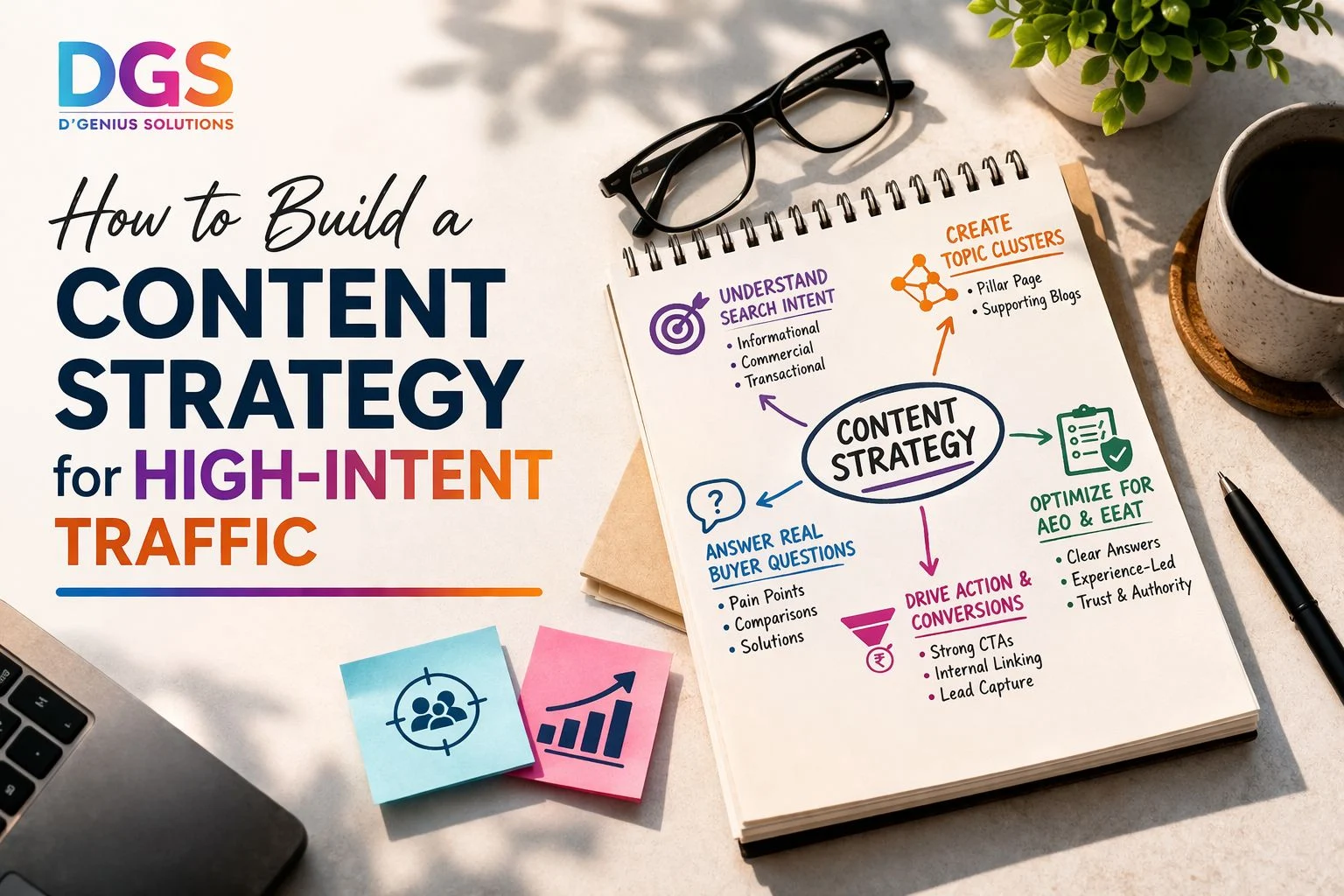
Search intent is one of the most important parts of a strong SEO strategy. Not every user is searching for the same reason, even when the keywords look related. Some want basic information. Some want comparisons. Some are ready to hire.
A high-intent content strategy should focus more on mid-intent and bottom-intent searches while still using educational content to support the journey. That means creating content around questions people ask before choosing a service, problems they are trying to solve, and mistakes they want to avoid.
When content matches intent, it naturally attracts better-fit users and improves the chances of conversion.
Build Content Around Service Clusters
One of the best ways to create a strong strategy is by building content clusters around core services. Instead of writing unrelated blogs, a business should create a connected structure where each blog supports a service category.
For example, if a business wants to grow its website-related services, it should build blogs around website performance, landing page conversion, website redesign, mobile experience, internal linking, and trust-building design. These topics support the main service while helping search engines understand the topic depth of the site.
This kind of structure improves relevance, strengthens internal linking, and helps build topical authority over time.
Create Content That Answers Real Buyer Questions
High-intent users often search with practical questions before making a decision. They want to know what works, what to expect, what mistakes to avoid, and how to choose the right solution.
That means content should be built around real buyer concerns, not just general definitions. For example, instead of only writing “what is digital marketing,” a stronger topic would be “how to know if your business needs a website redesign” or “why website performance affects lead generation.” These are closer to commercial intent and more useful for decision-making users.
This also supports AEO because answer-focused content performs better when it is written clearly, structured well, and aligned with real questions.
Use AEO Structure to Improve Visibility
If a brand wants better visibility in answer-based search experiences, the content needs to be easy to extract and easy to understand. AEO-friendly content usually performs better when it uses direct headings, simple explanations, concise opening answers, and clear FAQ sections.
That does not mean the writing should be shallow. It simply means the content should explain the point early, then support it with useful detail. Users want quick clarity, especially when they are comparing services or researching before contacting a brand.
A strong content strategy should therefore combine depth with simplicity. That helps both readers and search engines understand the page more easily.
Focus on Experience, Not Just Information
EEAT matters because users trust content more when it feels informed, useful, and grounded in real experience. A blog should not read like recycled advice. It should reflect practical understanding of what businesses struggle with and what solutions actually help.
This is where D’Genius Solutions can build stronger value. Since the agency presents itself as a team of creators, strategists, and tech-focused problem solvers, the content should reflect that same depth and real-world perspective. A content strategy becomes more powerful when it includes insight, clarity, and examples that feel connected to actual business needs.
Instead of writing generic content for everyone, the better approach is to create content that sounds relevant to the audience the brand wants to attract.
Connect Blogs With Service Pages
A common mistake is publishing blogs that have no clear relationship with service pages. Even if the content gets traffic, it may not help the business much if readers have no natural path forward.
High-intent content works better when blogs support service pages through internal linking, aligned topics, and consistent messaging. If a blog educates users on a problem, it should also guide them toward a service that helps solve it. That creates a stronger journey from discovery to enquiry.
This is one of the simplest ways to improve both SEO value and business value from content.
Track the Right Metrics
A high-intent content strategy should not be judged only by traffic numbers. It should also be measured through the kind of signals that show commercial value. Time on page, user journey, enquiry actions, assisted conversions, and service-page visits often matter more than raw sessions.
This helps businesses understand which topics are bringing the right audience and which pages are helping users move closer to action. Over time, that makes the content strategy much smarter and more focused.
The goal is not just to publish more. The goal is to learn which content attracts serious interest.
How D’Genius Solutions Can Build a Better Content Strategy
D’Genius Solutions can approach content strategy as part of a full digital growth system rather than as an isolated SEO task. The brand already positions itself as a full-service digital marketing agency with a mix of creative, strategic, and tech capabilities. That creates a strong foundation for a content approach that combines SEO, AEO, brand messaging, and conversion-focused planning.
By aligning blog topics with services, user intent, and business goals, content becomes more than a publishing activity. It becomes a channel for attracting relevant visitors and guiding them toward meaningful action.
Conclusion
Building a content strategy for high-intent traffic is not about creating more content for the sake of visibility. It is about creating the right content for the right audience at the right stage of decision-making.
Businesses that want better results should focus on intent, service relevance, topic depth, internal alignment, and clear answer-focused structure. When content is built with that level of purpose, it becomes far more effective at attracting qualified visitors instead of casual traffic.
For brands that want content to support both search visibility and lead generation, D’Genius Solutions can create a strategy that is rooted in clarity, experience, and real business intent.
FAQs
What is high-intent traffic?
High-intent traffic refers to visitors who are searching with a clear purpose and are more likely to take action, such as making an enquiry, comparing services, or requesting a solution.
Why is high-intent traffic better than high traffic volume?
High-intent traffic is better because it brings more relevant visitors who are closer to conversion, while high traffic volume alone may include users with little business value.
How do you build a content strategy for high-intent traffic?
A strong strategy starts with business goals, identifies real user intent, creates service-related topic clusters, and connects blogs with conversion-focused pages.
How does AEO help in a content strategy?
AEO helps by making content easier to understand and easier to surface in answer-based search experiences through clear structure, direct explanations, and useful FAQs.
Why does search intent matter in content planning?
Search intent matters because it helps ensure the content matches what users are actually looking for, which improves relevance, engagement, and lead quality.
How can D’Genius Solutions help with content strategy?
D’Genius Solutions can help by creating content that aligns SEO, AEO, service goals, and user intent to attract visitors who are more likely to become qualified leads.