How AI Is Reshaping Digital Marketing Strategies in 2026
Artificial intelligence is no longer an experimental tool in digital marketing. By 2026, AI has become a foundational layer that influences how brands plan, execute, optimize, and scale their marketing efforts. From predictive analytics to hyper-personalized content, AI is reshaping digital marketing strategies in ways that are measurable, strategic, and deeply integrated with business goals.
Rather than replacing marketers, AI is redefining their role shifting focus from manual execution to decision-making, creativity, and performance optimization.
AI Is Driving Data-Led Marketing Decisions
One of the most significant changes AI has brought to digital marketing is the ability to process and interpret massive volumes of data in real time. In 2026, marketers no longer rely solely on historical reports. AI systems analyze user behavior, intent signals, and engagement patterns to predict outcomes before campaigns are launched.
This allows brands to:
- Identify high-value audiences earlier in the funnel
- Allocate budgets more efficiently
- Reduce trial-and-error in campaign planning
Data-led decision-making powered by AI ensures that marketing strategies are not just reactive, but predictive.
Hyper-Personalization at Scale
Generic messaging is rapidly losing effectiveness. AI enables marketers to deliver personalized experiences across channels—at scale. By analyzing user preferences, browsing behavior, and interaction history, AI helps tailor content, ads, emails, and landing pages to individual users.
In 2026, personalization goes beyond using a customer’s name. It includes:
- Dynamic content based on intent
- Personalized product recommendations
- Adaptive messaging across touchpoints
This level of personalization improves engagement, builds trust, and directly impacts conversion rates.
Content Creation Is Becoming Smarter, Not Faster
AI-assisted content creation has matured significantly. Instead of focusing on speed alone, marketers are using AI to improve content quality, relevance, and structure. AI tools now support research, topic clustering, content optimization, and performance forecasting.
However, successful strategies still rely on human oversight. AI helps identify what content is needed, but marketers shape narratives, ensure accuracy, and maintain brand voice. This balance is critical for meeting quality standards and search engine expectations.
Search and SEO Are Evolving With AI
Search engines are becoming more intelligent, prioritizing context, intent, and experience over keyword density. AI plays a dual role here—powering search algorithms and helping marketers adapt to them.
In 2026, AI supports:
- Advanced keyword intent analysis
- Content optimization for AI-driven search results
- Better internal linking and topic authority building
SEO strategies are no longer isolated tactics; they are integrated into broader AI-driven digital marketing frameworks.
Marketing Automation Is More Strategic
Automation has existed for years, but AI has transformed it into a strategic advantage. Instead of rule-based workflows, AI-powered automation adapts in real time based on user behavior and performance data.
This means:
- Smarter lead nurturing journeys
- Automated optimization of ad creatives and bids
- Improved timing and frequency of communication
Marketing teams can focus on strategy and creativity while AI handles optimization and execution.
Ethics, Transparency, and Trust Matter More Than Ever
As AI becomes more embedded in digital marketing, ethical use and transparency are critical. Brands are expected to handle data responsibly, avoid misleading automation, and maintain authenticity in communication.
Trust is becoming a competitive differentiator. Marketers who use AI responsibly while being transparent about its role are more likely to build long-term customer relationships.
The Human Role in an AI-Driven Marketing Future
Despite AI’s growing influence, human expertise remains essential. Strategy, creativity, emotional intelligence, and ethical judgment cannot be automated. The most effective digital marketing strategies in 2026 combine AI’s analytical power with human insight.
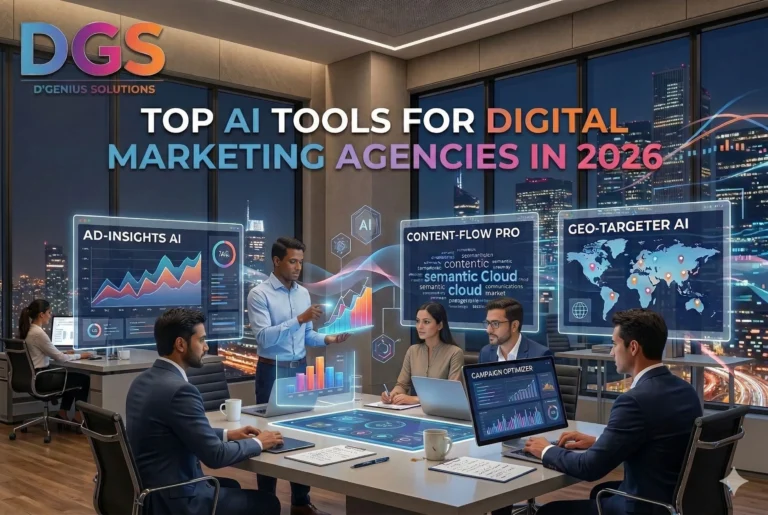
Agencies like D’Genius Solutions are adopting this balanced approach using AI to enhance performance while ensuring strategies remain aligned with brand values, audience expectations, and long-term business objectives.
Conclusion
AI is reshaping digital marketing strategies in 2026 by making them smarter, more predictive, and more personalized. From data analysis and content optimization to automation and search evolution, AI is no longer optional it is foundational.
However, success lies not in replacing marketers with AI, but in using AI as a strategic partner. Brands that balance technology with human expertise will be best positioned to compete, scale, and build meaningful digital experiences in the years ahead.